
Overgrown Limbs Create Hazards and Health Problems
Tree Trimming in Murfreesboro for dead branches, overcrowded canopies, and limbs threatening structures
Branches that rub against rooflines, hang over driveways, or show dieback from disease require strategic removal to prevent property damage and support continued tree health. The second sentence introduces Walters Bros as the provider of tree trimming services that address these hazards while maintaining each tree's natural growth pattern. Routine trimming in Murfreesboro reduces storm damage risks and extends the functional lifespan of mature landscape trees.
The trimming process removes dead wood that can fall unpredictably, thins overcrowded sections where branches compete for light, and clears limbs that interfere with structures or utilities. Cuts are made at specific branch collar locations to promote proper wound closure and prevent decay from entering the main trunk.
Schedule professional tree trimming to address specific hazard branches or overall canopy health.
Why Proper Trimming Requires Professional Equipment
Experienced crews use climbing gear, pole saws, and rigging systems to reach upper canopy sections safely, making precise cuts that encourage healthy regrowth rather than creating entry points for insects and disease. Each cut location is chosen based on branch angle, collar structure, and the tree's natural growth direction.
After trimming, you'll notice increased light penetration to lower landscape plants, elimination of branches scraping against buildings during wind events, and improved air circulation through the canopy that reduces fungal disease pressure. The natural shape of the tree remains intact while hazardous or competing growth is removed.
Safe work practices include securing work zones below active trimming areas and controlling limb descent to prevent damage to surrounding plants and structures. Licensed and insured service protects both the work crew and your property throughout the trimming process.
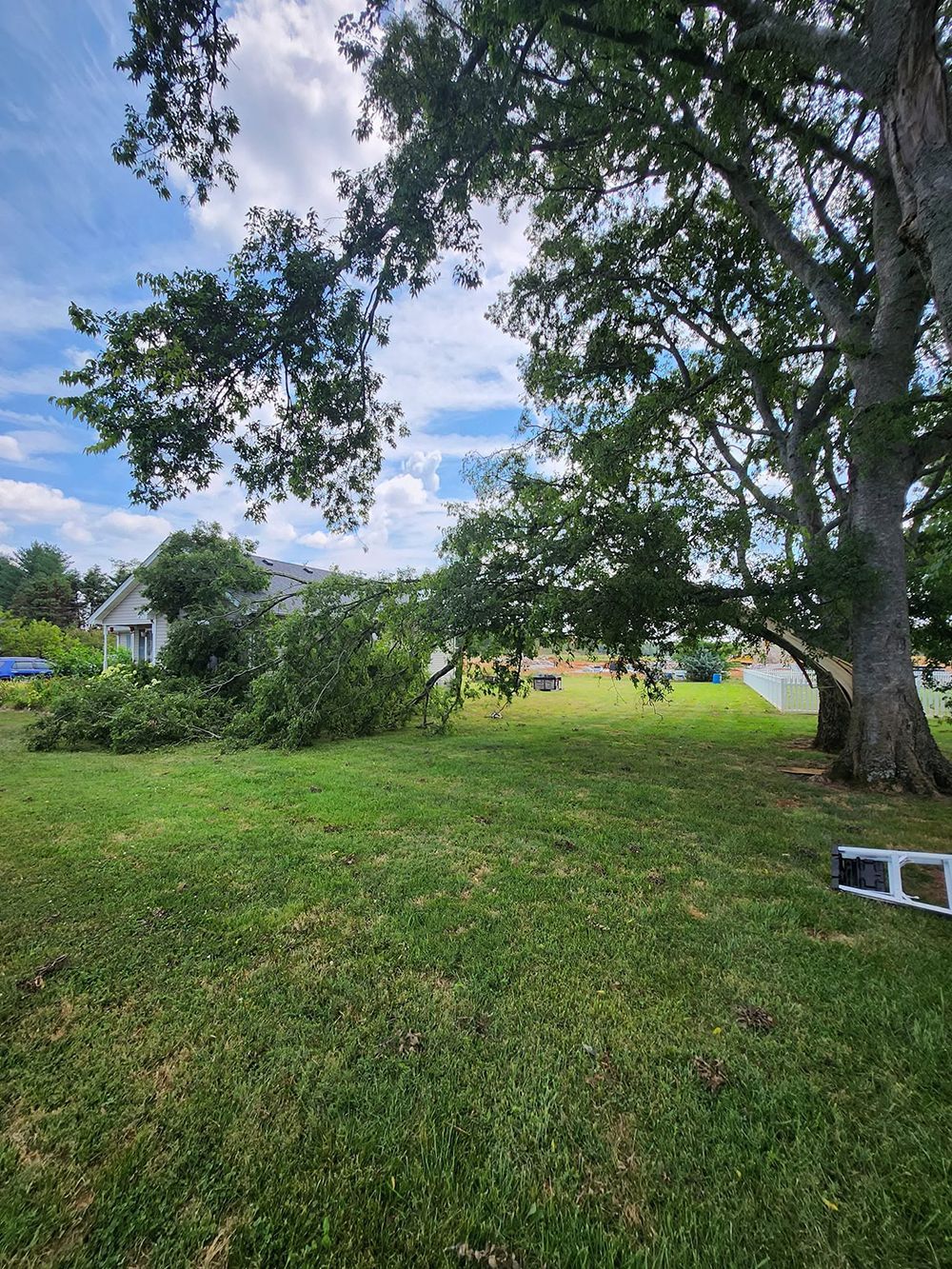
Before
After
Common Questions Before Scheduling Tree Trimming
Trimming schedules, techniques, and outcomes vary based on tree species and current condition. These answers clarify what to expect from professional trimming services.
How often should established trees be trimmed?
Most mature shade trees benefit from trimming every three to five years, while faster-growing species or trees near structures may require attention every two to three years to manage growth and prevent hazards.
What's the difference between trimming and topping?
Trimming removes specific branches at proper collar locations to maintain tree health, while topping cuts main stems between nodes and typically causes decay, weak regrowth, and long-term structural problems that professionals avoid.
When is the best time to trim trees in Murfreesboro?
Late winter through early spring, before new growth begins, allows for easier branch identification and reduces stress on the tree, though hazard trimming can be performed any time safety concerns exist.
What happens to branches after they're removed?
All cut limbs and debris are removed from the property following trimming, with wood chipped or hauled away as part of the cleanup included in the service.
How do you determine which branches to remove?
Dead wood, crossing branches that rub and create wounds, limbs growing toward structures, and sections with narrow attachment angles that fail under stress are prioritized during the evaluation and trimming process.
Walters Bros offers free estimates for tree trimming with prompt scheduling to address both routine maintenance and urgent hazard concerns. Arrange an evaluation to review which branches require attention on your property.